Incident Management
1. Incident
An incident, defined as an unplanned interruption to an IT service.
1.1 Examples
- Email not working
- VPN down
- Application slow
- Printer not responding
2. Incident management
Incident management is the process of identifying, analyzing, and resolving incidents that disrupt normal business operations or IT services, with the goal of restoring services as quickly as possible and minimizing impact on users and business operations.
3. Objectives
Restore the service as quickly as possible
- Minimize disruption to the user’s work
- Manage the incident throughout its entire lifecycle
- Support operational activities
4. How Incidents Can Be Created
Incidents can be raised in many ways:
- Service Portal (self-service)
- Email inbound actions
- Phone call to Service Desk
- ITSM Mobile app
- Integration (API)
- Auto-created via Monitoring/Event Management
- Manually by agents in ServiceNow
5. Fields in the incident management
5.1 Caller
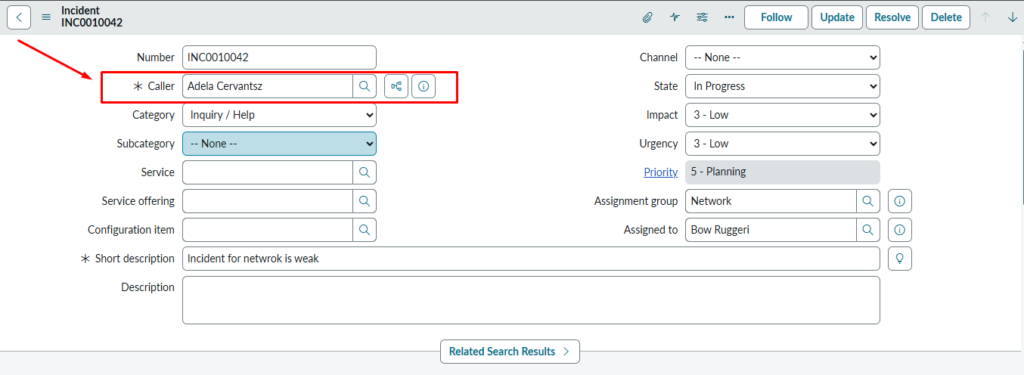
Caller field identifies the person who is reporting the issue.
5.2 Urgency
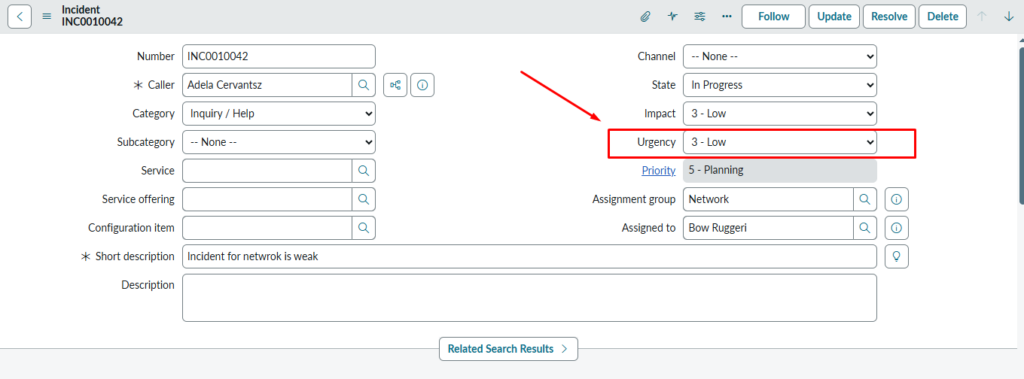
Three levels of urgency are given in the list box that are High, Medium, and Low as per the incident type.
5.3 Channel
Incident can be raised through following channels
1)Chat
2)Email
3) Phone
4)Self-service
5)Virtual Agent
6)Walk-in
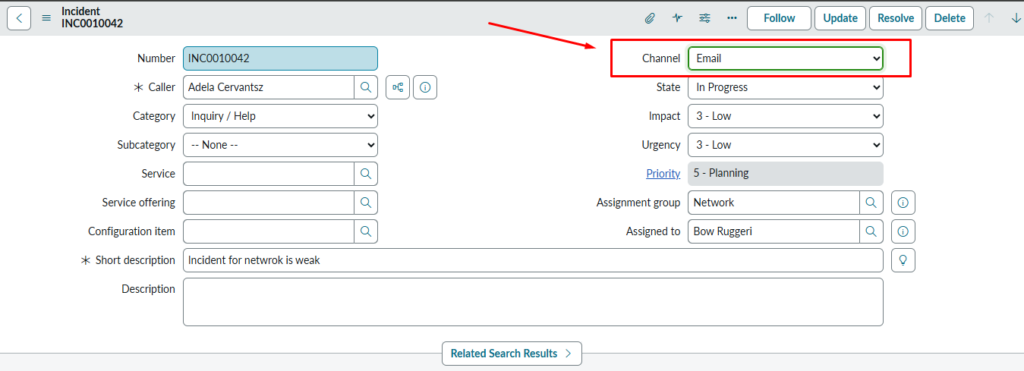
Short description: A short description is a summary of an incident, typically used to quickly communicate the nature of the problem to relevant parties.
6. States
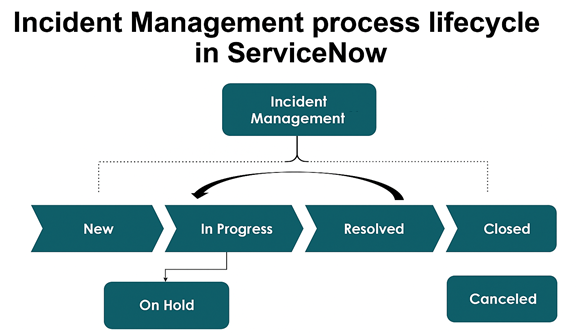
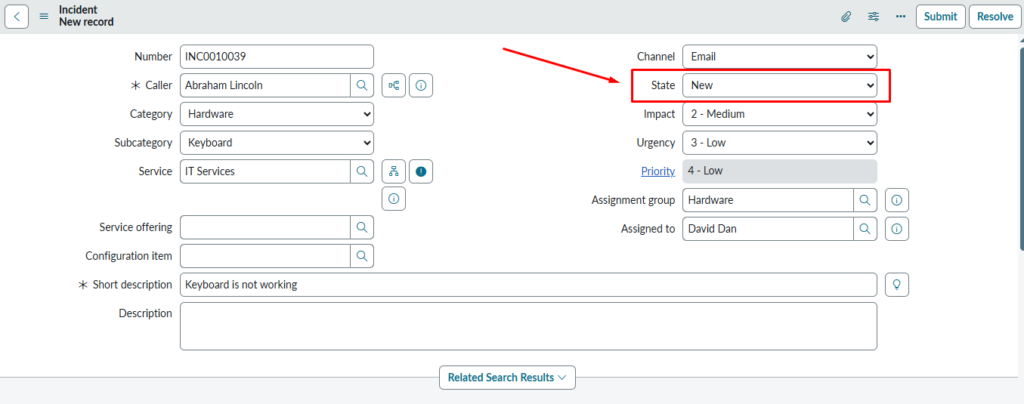
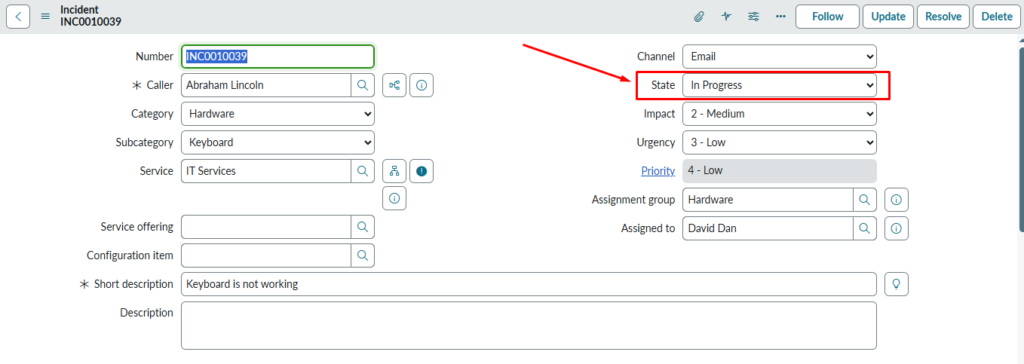
State: New, In Progress, On Hold, Resolved, Closed, canceled. These are the states where the incident is placed as the status of the incident by the ‘Assigned to person’.
6.1 Incident States in ServiceNow
State | Meaning |
New | Raised but not yet acted on |
In Progress | Work is ongoing |
On Hold | Waiting for user/vendor/approval/information |
Resolved | Fix applied; pending confirmation |
Closed | Fully closed |
Canceled | Invalid or mistakenly created |
New: When incident is new and still not Assigned.
In Progress: When the incident is assigned to someone who can solve the incident.
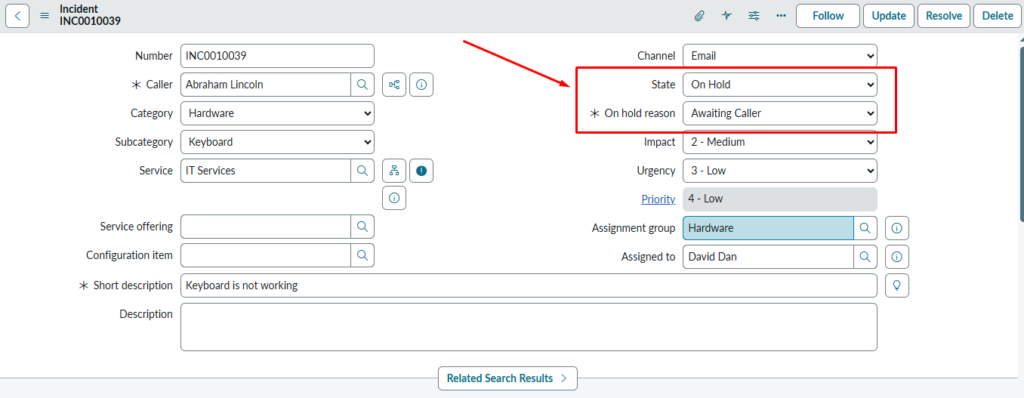
Two fields are mandatory before putting your incident on-hold state that is
On hold reason and comments (visible to both Customer and IT staff)
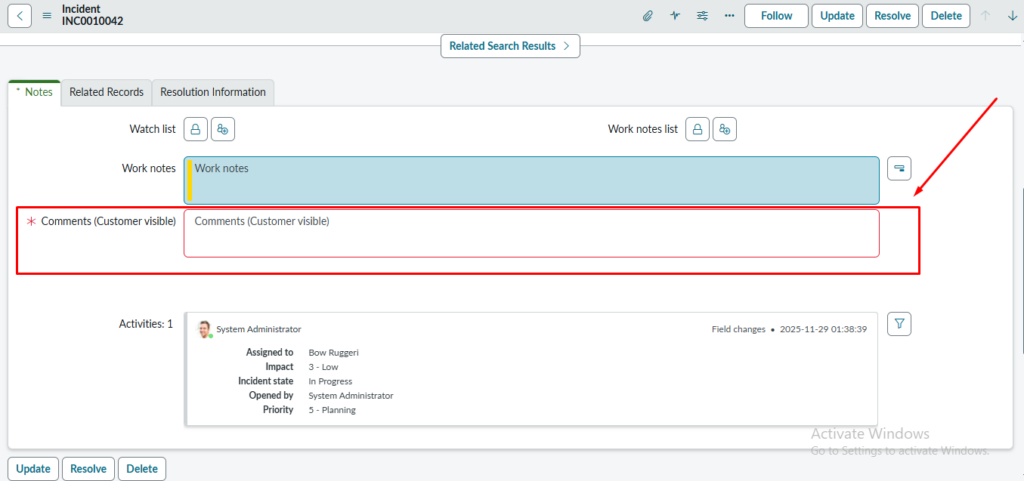
On Hold: The On-Hold state in incident management is a temporary status where the incident resolution is suspended because the team is waiting for necessary action from the caller. In the On Hold state, the on-hold reason field is mandatory.
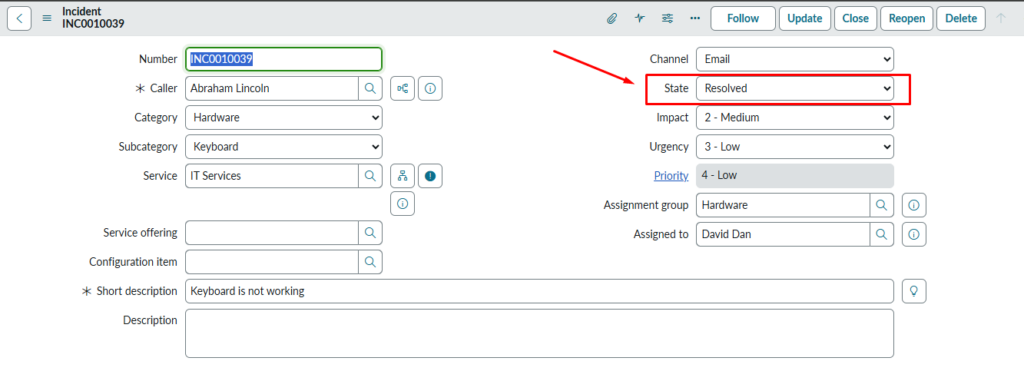
Resolved: The incident considered to be resolved when the service has been resolved to its normal state. The two fields are mandatory to fill.
1) Resolution code
2) Resolution notes

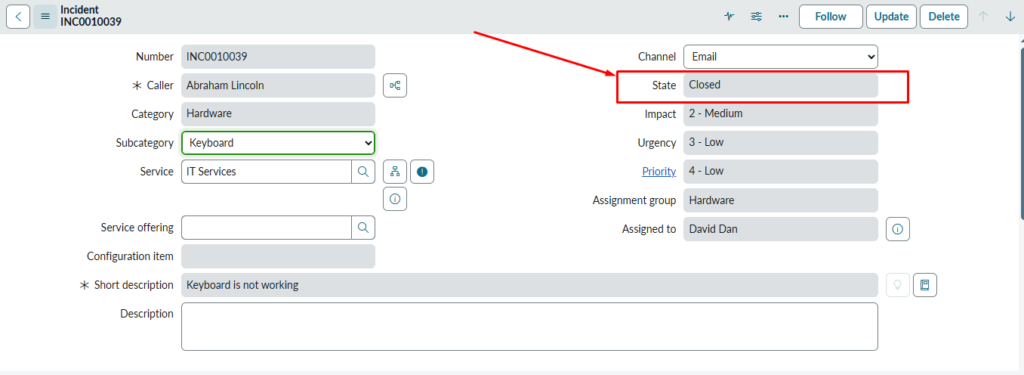
Closed: The incident is closed when issues are resolved, and all necessary actions are completed
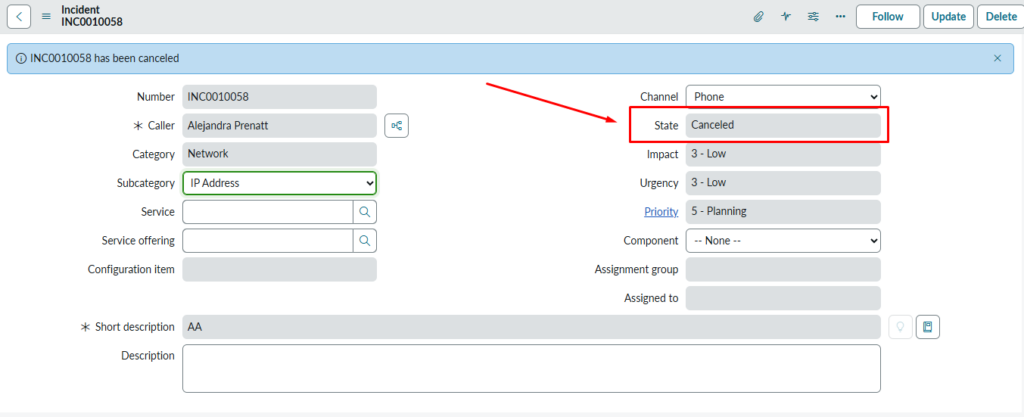
Canceled: The Canceled state represents an incident that is no longer required to be worked on.
This means the incident does not need investigation, troubleshooting, or resolution.
7. Incident Management – Table Fields (ServiceNow)
Table Name: incident
Field Name | Label | Description |
number | Incident Number | Auto-generated unique number for each incident. |
caller_id | Caller | The user who reported the incident. |
short_description | Short Description | A brief summary of the issue. |
description | Description | Detailed explanation of the issue. |
category | Category | High-level classification (e.g., Network, Hardware, Software). |
subcategory | Subcategory | More specific classification under category. |
impact | Impact | Scope of the incident (Low/Medium/High). |
urgency | Urgency | How quickly the issue needs to be resolved. |
priority | Priority | Calculated from Impact + Urgency. |
assignment_group | Assignment Group | The group responsible for working on the incident. |
assigned_to | Assigned To | The person working on the incident. |
state | State | Current status (New, In Progress, On Hold, Resolved, Closed). |
on_hold_reason | On Hold Reason | Reason for putting the incident on hold. |
resolve_time | Resolve Time | Date & time when the incident was resolved. |
close_code | Close Code | Reason for closing (e.g., Solved Permanently, Duplicate). |
close_notes | Close Notes | Notes added by resolver when closing. |
opened_at | Opened At | Date & time incident was created. |
opened_by | Opened By | User who created the incident. |
updated_at | Updated At | Last modified date. |
u_symptom | Symptom | Description of symptoms (custom field in many orgs). |
cmdb_ci | Configuration Item (CI) | CI affected by the incident. |
location | Location | Location of the caller or incident. |
contact_type | Contact Type | How the incident was reported (Phone, Email, Self-Service). |
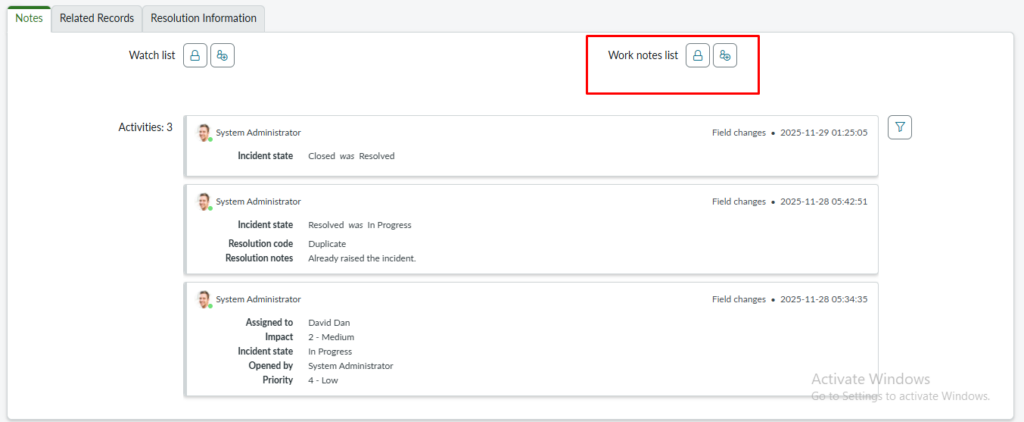
work_notes | Work Notes | Internal notes by support team. |
comments | Additional Comments | Notes visible to the caller. |
sla_due | SLA Due | When the resolution is due as per SLA. |
reassignment_count | Reassignment Count | Number of times the ticket was reassigned. |
problem_id | Problem | Linked Problem record if related. |
rfc | Change Request | Linked Change request if created from the incident. |
knowledge | Knowledge | Checkbox to suggest a knowledge article. |
Additional comment
Additional comments are used to capture information visible to and often entered by the end user (Caller) as well as IT staff. It facilitates communication between the service desk and the user.
Work note
This field is used to document internal notes and technical details about the incident, intended for IT staff and support teams only.